Medusa Lands in Nador, Advancing Morocco’s Role in Mediterranean Connectivity
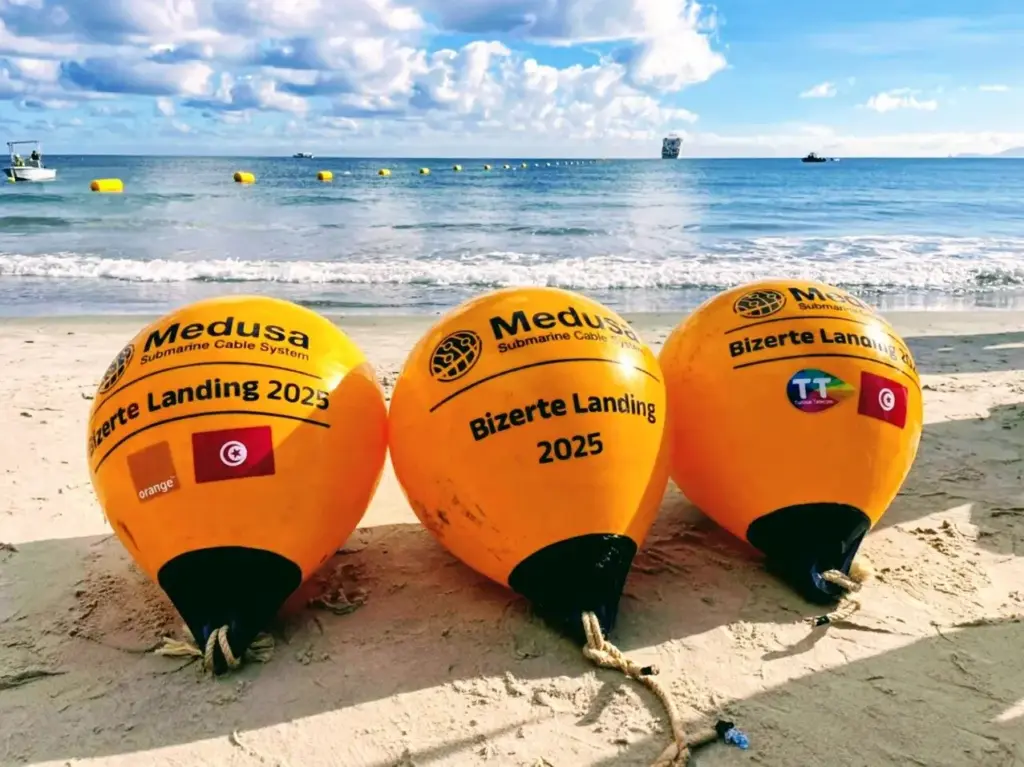
Nador, December 26. The Medusa Submarine Cable System, the largest subsea connectivity project in the Mediterranean, has reached another major milestone with the successful landing of its cable in Nador, Morocco. This achievement follows the recent deployments in Marseille (France) in October and Bizerte (Tunisia) in November, reinforcing the system’s steady progression across both shores of the Mediterranean.
The arrival of Medusa in Nador underscores the project’s mission to strengthen digital infrastructure by providing resilient, high-capacity connectivity routes between Europe and North Africa. This milestone enhances the region’s strategic role in global data flows and supports the growing demand for secure and reliable international bandwidth.
“This year has marked significant progress for Medusa, and the landing in Nador is another key step forward,” said Norman Albi, CEO of Medusa. “After Marseille and Bizerte, this achievement demonstrates our commitment to building a state-of-the-art subsea network connecting the Mediterranean region”
This will be followed by the deployment of the remaining landings throughout 2026, ensuring the progressive expansion of the system across the region. This first connection between the two shores of the Mediterranean brings to life Medusa’s ambitious vision: deploying over 8,700 km of submarine cable to interconnect Southern Europe, North Africa and Middle East, with 19 landings.

Local partners play a pivotal role in the Medusa system’s development in Morocco
As essential contributors to the project’s success in the country, Orange Morocco and inwi have worked closely with Medusa during the landing in Nador, supporting the project’s development in the country and strengthening Morocco’s position in the regional connectivity landscape.
“The landing of the Medusa submarine cable in Nador marks a major milestone for Morocco’s international connectivity and digital sovereignty. For inwi, this project reflects a long-term commitment to investing in resilient, high-capacity infrastructures that strengthen the country’s position at the heart of Mediterranean and global data routes. By diversifying international connections, we are supporting the growth of digital uses, economic competitiveness, and Morocco’s ambition to become a regional connectivity hub, in line with the Maroc Digital 2030 strategy,” said Azdine El Mountassir Billah, CEO of inwi.
“The landing of Medusa in Nador marks a decisive milestone for Morocco’s connectivity and strengthens its position as a regional digital hub, said Hendrik Kasteel, CEO of Orange Morocco. Orange Maroc is proud to host this submarine cable and to inaugurate the Kingdom’s first Cable Landing Station. This project was made possible thanks to the commitment of our teams in Morocco and the global expertise and support of the Orange Group and its specialized subsidiaries, Orange Marine and Elettra TLC. This is further proof of our long-standing commitment to building the infrastructures that support Morocco’s digital sovereignty and economic development.”
Their involvement highlights Morocco’s growing leadership in digital transformation, as well as the importance of national operators in enabling large-scale international connectivity projects.
EU-backed initiatives reinforce regional research, education, and infrastructure development

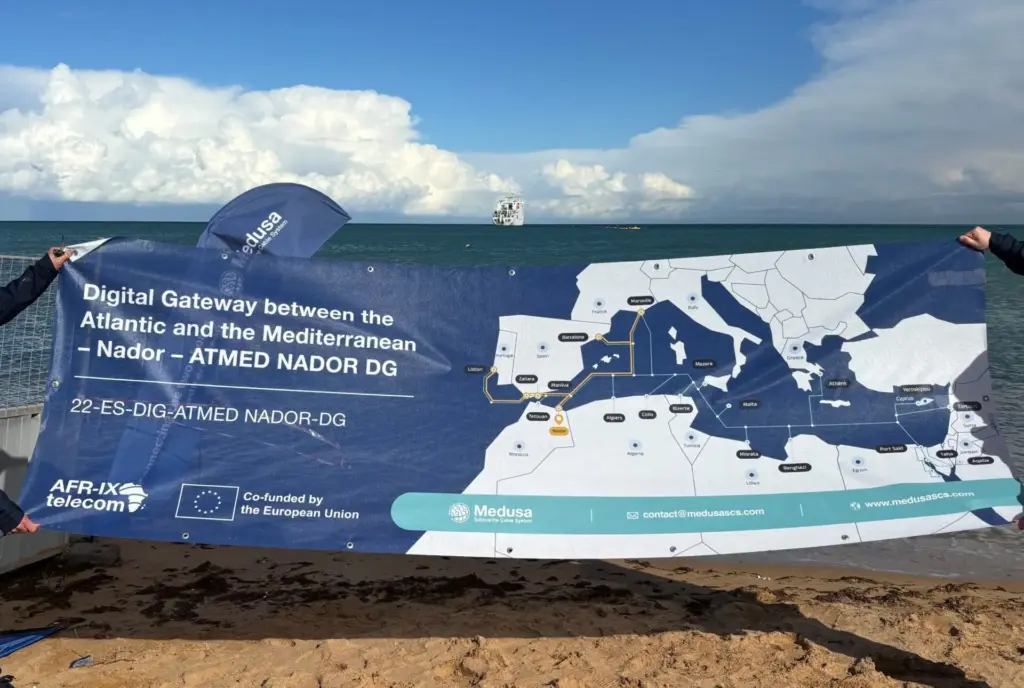
This achievement also aligns with broader EU efforts to strengthen digital connectivity, research collaboration, and infrastructure across the Mediterranean. Through funding from the European Investment Bank (EIB) to GÉANT, the EU increases the capacity of National Research and Education Networks (NRENs) across the region and enhances connections for research centres in the Southern Neighbourhood. In addition, through the Connecting Europe Facility, the EU supports the deployment of strategic submarine cables — including the ATMED Nador project by AFR-IX Telecom — which reinforces digital resilience and cross-border cooperation across the Mediterranean.
“Reliable and secure digital connectivity is a cornerstone of economic resilience, innovation and regional integration. The landing of the Medusa cable in Nador represents a significant step in strengthening digital links between Europe and North Africa, delivering ultra-high capacity and cyber-secure connectivity across the Mediterranean. By directly connecting national research and education networks, this project will foster deeper cooperation among universities and research centres, supporting knowledge exchange and innovation. It highlights the European Investment Bank’s enduring commitment to investing in strategic digital infrastructure that advances connectivity, cooperation and shared prosperity across our neighbouring regions,” said European Investment Bank Vice-President Ioannis Tsakiris.
“The connection of the high-speed MEDUSA submarine cable to Nador today brings to life the spirit of the Pact for the Mediterranean that we launched recently. In addition to providing secure and open connectivity between Europe and Morocco, this cable paves the way for a digital cooperation that we want to be dynamic, innovative, and ambitious. It symbolizes our shared aspiration to position our countries, and the Mediterranean as a whole, within the major technological advances currently unfolding,” said his Excellency, Dimiter Tzantchev, Ambassador of the European Union to Morocco.
With ongoing deployments planned for 2026, Medusa continues to advance towards full system implementation, consolidating its role as a transformative project for regional and international telecommunications.